

Five Aspects of Women Brunch in Dallas
In September, Barbara Mouser and I were invited to attend the final, celebratory brunch meeting of a lovely group of women who had just finished studying the Five Aspects of Women. While going through the study, they had written down questions that they had for Barbara, and they saved them for this special occasion. What ensued was the blessed fellowship of women around God’s Word. I was thrilled to have the opportunity to be a part of this and to listen to the women, women from multiple generations, ask their questions and share their hearts. God is still using this classic study for His glory in His Church.


Online Five Aspects of Women?
Several women have contacted me looking for Five Aspects of Women Bible studies in their areas. I have been able to help make a few connections. However, for many, there are no studies in their areas that I know of. It has been proposed that we offer an online Five Aspects of Women course through the ministry. I am contemplating putting this online course together. If you read this and would be interested in it, as either a potential student or facilitator, please let me know by emailing me, Kristine, at info@fiveaspects.com.
Bad News: Price Increases
We just received news that prices on all printed materials are going up substantially. The first round of price increases will start November 1st, and the second round of increases will take place in 2027. We have not run all the numbers yet, but in order to deal with these increases, we will be raising the prices on our materials. I have placed a large restocking order of materials at the current pricing get us through 2026 at our current pricing. We will do our best to keep the costs as low as we can and still stay in ministry.
Defending Five Aspects Ministries
A few Communiqués ago, I wrote a defense of the use of the word “mistress,” and below you will find the first of three defenses that deal with the Husbandman and Helper-Completer aspects. Why? Why go on the defensive? You probably won’t be surprised when I say this, but we have a lot of critics and naysayers, and from my position, I get to see them all. As in the case of the word mistress, I needed to put into words what the process has been in dealing with them all and our rationale for keeping the word. Concerning the coming defenses on Helper-Completer, the critiques and challenges are more serious. Most of them deal with the complaint of bad hermeneutics and reading too much into Scripture. The critiques are serious, and if true, then we are in error. This is why I believe they merit a defense, not only to respond to critics but also to offer insight and teaching to help others think through the issues. It is really easy to throw dirt, but it takes more effort and grace to clean up the mess. Each defense will eventually be added to our resource page for future reference. I hope these articles are helpful to someone. They have been excellent exercises for me.
Kristine Vermillion
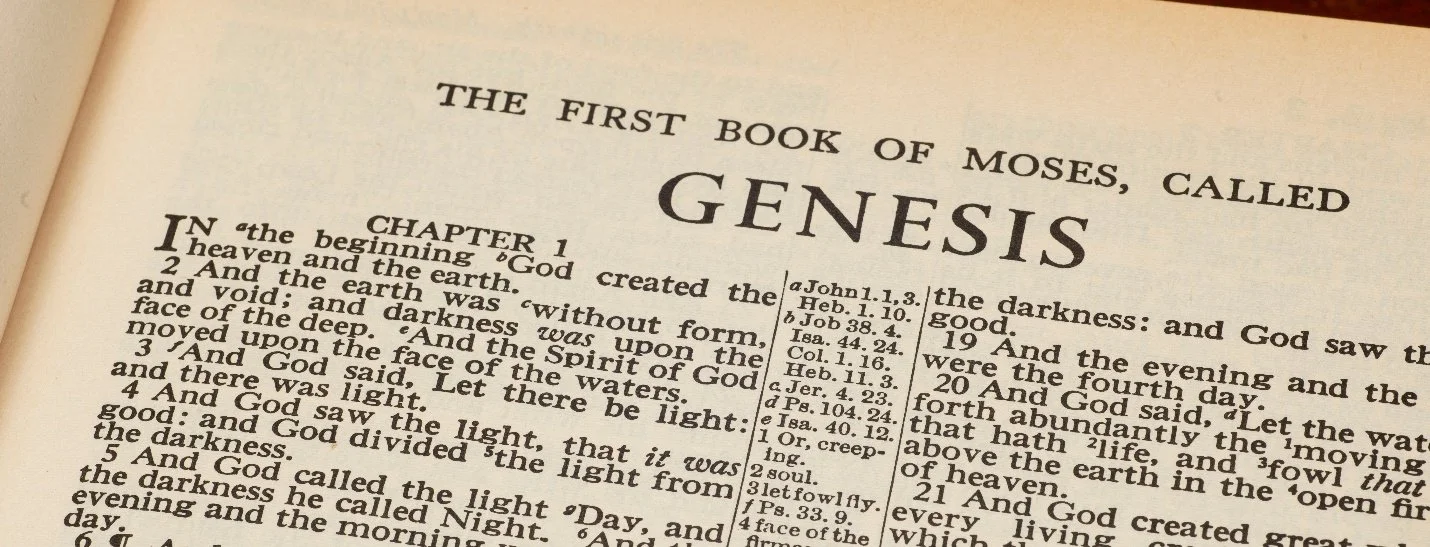
Hermeneutics and the Second Aspect: Husbandman and Helper-Completer
The second aspect in our studies is by far the most controversial. In the Five Aspects of Man this aspect is called “Husbandman” and in Five Aspects of Woman it is called “Helper-Completer.” While I do not think I have ever heard of a man reacting vehemently to the second aspect, plenty of women have.1 One of the critiques is that it is “reading too much” into the Genesis 2 creation narrative and makes generalities that should not be made. As such, it is not adequately based on Scripture, and the entire study should therefore be thrown out and abandoned. This statement may seem harsh, but it is a summary of many vehement reviews posted about the study.
Therefore, this Communiqué evaluates that criticism by examining the hermeneutical method underlying the second aspect. I will argue that its central teachings arise from a legitimate progression: careful observation of Genesis 2, exegesis informed by the passage’s literary and theological context, and exposition guided by the New Testament’s own use of the creation account. The question is not whether every possible inference from Genesis 2 is valid, but whether the text’s order, relationships, and responsibilities may properly inform our understanding of God’s purposes for man and woman. This discussion addresses the method by which these conclusions are reached. The next Communiqué will consider a related question: when and how principles drawn from a biblical narrative may be stated as general truths and applied beyond their original setting.
Important Terms
Knowledge of the following terms are important to understanding the process of disciplined approach to Bible study and application.
Hermeneutics is the theory and methodology of interpretation. It is commonly referred to as both the science (principles) and art (task) by which the meaning of the biblical text is determined.
Exegesis is the analyzation of language, historical context, and cultural background to accurately understand and interpret the intended meaning of Scripture.
Biblical Exposition is the accurate interpretation and explanation of Scripture aimed at conveying its original meaning and applying it to the lives of the listeners. This method attempts to ensure that the message is rooted in the text itself, allowing for a deeper understanding of God’s Word.
Eisegesis is the interpretation of something to reflect the personal ideas or viewpoint of the interpreter. Eisegesis involves reading something into a text that isn't there.
Start with Observation
To get started, I want to recount an experience I had in my first seminary class: Bible Study Methods and Hermeneutics. The beginning of hermeneutics is observation. Our first assignment for the class, therefore, was an observation assignment. We were to read Acts 1:8 and then list at least twenty-five observations. Our second assignment was to go back to Acts 1:8 and list twenty-five more observations that were distinct from the first list. Our third assignment was to read Acts 1:6–11 and write at least twenty-five more observations that were distinct from the first fifty observations we had made. Thankfully, for our fourth assignment, we turned to the book of Nehemiah. Though many people groaned and complained about these assignments, I found them to be particularly fruitful. The purposeful time and effort put into observing these thirty-seven words that make up Acts 1:8 really opened the passage for me.
The content of the Husbandman Created and Helper-Completer Created lessons in Five Aspects of Man and Five Aspects of Woman courses is largely built upon this type of observation exercise done on Genesis 2:15–25. Through observation and paying attention to the details, one can easily come up with the following table that appears in some form in both studies.
| Design Features Peculiar to Man | Design Features Peculiar to Woman |
|---|---|
| made first | made second |
| made from the earth | made from man the person |
| brought to his territory by God | brought to her man by God |
| created to work the earth | created to help the man |
| the namer | the named |
| given the Adamic mandate | enables man to fulfill his mandate |
| the initiator of marriage | given by God in marriage to man |
| warned about death by God | warned about death by Adam |
| the head of the race | the crown of creation, completing God’s work |
Moving to Exegesis:
The question, then, is whether this a legitimate activity? The answer is yes. Why wouldn’t it be? The next question is: How far can we go with these observations? This moves into the arena of exegesis. Exegesis is the analyzation of language, historical context, and cultural background to accurately understand and interpret the intended meaning of Scripture. How do we do exegesis with our observation list on Genesis 2? In terms of language, historical context, and cultural background, Genesis chapters 1–2 are extremely unique. They are specifically about God’s creation of the world. Chapter one is the broad overview. Chapter two is a more intricate look at day six and the creation of the man and the woman. They are about God and His good creation. Specifically, in the biblical narrative, they are very important, because they come before Genesis 3 where “the Fall” and the consequent curses come into play. Genesis 1–2 are then, pre-fall, and from them we can begin to interpret, i.e., exegete, what we were created to be before sin and the curse entered the storyline. By looking at them, we can learn about God’s very good purpose that He created us for in the beginning.
One of the major observational takeaways from looking at Genesis 1–2 is the importance of order in the narrative. Chapter one builds this order within the day one to day seven framework. In chapter two, order is also apparent in the story as it is told. Adam is created first, and the woman is created second. One cannot argue with the fact that this is the way the story is told. Many, however, do argue that the said order does not have any importance and that it cannot be used to make any sort of definitive statements about Scripture in general or how we are to live our lives in particular. However, several New Testament authors do not see it this way. In fact, they all treat Genesis as historical fact and use it regularly to ground their teachings. Jesus, who was present at Creation (John 1:1–5; Colossians 1:15–18) Himself, quotes the creation story and uses it to argue that the events in Genesis 2, primarily the marriage of the first man and the first woman, still stand as the legitimate reasoning behind His teachings on marriage. Then Paul, specifically uses the story that man was created first and the woman second to teach a concept that is applicable to the Church centuries later—that is the headship of man as well as the interdependence of both men and women (1 Corinthians 11:7–12). In his first letter to Timothy, Paul also explicitly refers to the created order of man and woman (1 Timothy 2:13–14).
On to Exposition:
The next step in hermeneutics is exposition where we work on the accurate interpretation and explanation of Scripture aimed at conveying its original meaning and applying it to our lives. What, if anything, can be interpreted and applied through the observations and exegesis we have done? The theological statement, “Ten Biblical Reasons for the Pre-Fall Headship of Man” is the legitimate fruit of such an exercise, for it is where the observations made and the exegesis done are put together in a way that shows the significance of the observations and how they are “at play” in theological development and biblical understanding. When I read and reread this list as presented in Five Aspects of Woman, the clear statements and reasonings given for the Pre-Fall Headship of Man evidence sound hermeneutical principles and strong biblical reasoning.
Ten Biblical Reasons for the Pre-Fall Headship of the Man
1. Adam was created first.
The fact that Adam was created before woman is explicitly given as a reason for man’s headship in the Church (Genesis 2; 1 Timothy 2:12–13).
2. Adam was given the Garden Mandate.
Adam was given responsibility for life and work in the garden before woman was created. God follows this pattern in the Mosaic Law and the Great Commission, which are also addressed to men (Exodus 20:17; Deuteronomy 13:6–9, 21:11, 28:30; Matthew 28:16–20).
3. Woman was created from man.
Woman’s flesh and bone came from man. All of the race is headed by Adam, for even Eve came from him. One of the reasons for man’s headship of his wife, cited in 1 Corinthians 11:8, is that woman originates from man.
4. Woman was created for man.
God’s stated purpose for creating woman was man’s need of a helper. For indeed man was not created for the woman’s sake, but woman for the man’s sake (1 Corinthians 11:9).
5. Woman is a divine gift to man.
God brought His last creation to the man and presented her as a gift from a Sovereign to His viceroy (Genesis 2:22). Proverbs 19:14 teaches that the giving of godly women to men is still a direct act of God.
6. Adam named woman.
While the spirit of Adam’s naming of woman in Genesis 2 is clearly one of joy, excitement, and love, the fact remains that naming in the Bible is associated with ruling. God named Adam; Adam named the animals and woman; parents name children; kings name subjects; and Jesus named His disciples. To name is to discern the character of what is being named and to take it for one’s own (Genesis 17:5, 15; 26:20–22; 32:26–28; Exodus 2:10; Matthew 16:18).
7. Man is to initiate marriage.
Genesis 2:24 designates man as the initiator of marriage. He should leave his father and mother and cleave to his wife. For this cause of Genesis 2:24 refers to the content of verses 21–23. Because woman was made from man, for man, and brought to man, she should be sought and received by the man. The human story starts with a wedding, not a birth, and it is the man’s responsibility to start that story over and over again by founding each new home.
8. Man and woman picture Christ and the Church from their sinless beginning.
Ephesians 5:30–32 teaches that the very details of the original creation of man and woman were arranged to picture Christ and the Church. God led Adam to open his side willingly and experience a figurative death so that his bride could come forth. From the pre-fall, innocent dawn, God fashioned Adam to picture Christ the Lord and woman to picture the Church built from His bleeding side. Christ loves the Church because she is spiritually His body and blood, just as Adam loved woman because she came from his physical body.
9. The post-fall headship of man makes New Testament theology nonsensical.
The New Testament clearly compares the husband’s headship over the wife to Christ’s headship over the Church. The wife’s submission to the husband is to be like the Church’s submission to Christ. If the goal of Christian marriage is to outgrow the evil of male headship (as many evangelical feminists insist), then the goal of the Church would be to outgrow the authority of Christ. This is nonsensical. Adam’s Christ-picturing headship and woman’s Church-picturing membership are inextricably part of God’s very good creation. This head-body relationship of man and wife does not need to be erased; it needs to be restored (Ephesians 5:22–33).
10. We are damned and saved by male headship.
In Adam all die. Woman’s sin brings a curse in two areas—childbearing and marriage. But man’s sin brings a curse on the earth and death itself. Romans 8:22 says the whole creation groans with Adam’s curse. And what of death?...through one man sin entered into the world, and death through sin... (Romans 5:12). God gave Adam the Garden Mandate, and Adam is the one brought to account for it. Even Eve died in Adam for she, too, was from him and under his authority. Created male headship is not a trivial doctrine of Scripture. By it, we are both damned and saved. For as in Adam all die, so also in Christ all shall be made alive (1 Corinthians 15:22).
A Competing Interpretation:
But what are we to do when we do not like the direction the observations lead and the lessons that come out of such an activity? It is very likely that we will be tempted to do some eisegesis which is when we bring our modern biases, cultural assumptions, and political views to the text and try to make the text say what we want it to say. Here, modern biases, cultural assumptions, and political views say that male headship is implicitly wrong, outdated, and evil. Because this is what we have been taught and led to believe, the eisegete (one who teaches by eisegesis) will say that Genesis 1-3 does not teach the creational headship of man and that the first and then second order events do not really matter. Instead, they will overlook the order, and they will just look at the curses in chapter 3, especially Genesis 3:16 and teach that the headship of man is part of the curse, and as such, it is something we must destroy and overcome. They do this because this “conclusion” fits what they bring to the text and fits what they want the text to say. This, however, is a compromised hermeneutic.
While this temptation is understandable and while the jump is regularly made, it does not make it good hermeneutics. In fact, such a jump makes New Testament theology nonsensical. The internal logic at work in Romans 5 is based upon the headship of the first Adam and the headship of the second Adam. The internal logic of Ephesians 5 doesn’t work if the headship of man is the curse that women need to overcome, because then by parallel, the Church’s goal would then be to “overcome” the headship of Christ. Therefore, paying careful attention to the creation narrative seems more than warranted—it is essential. I completely understand why these statements are jarring and evoke such strong reactions from so many. I do. However, mere eisegetical quips and tantrums do not truly handle the text in a disciplined way. Quips and tantrums are easy. However, I want to see disciplined exegesis that handles the text in a way that presents a better competing interpretation.
Conclusion:
The question is not whether Genesis 2 permits every conclusion we might wish to draw from it, but whether its details may legitimately inform our understanding of God’s purposes in creation. Careful observation identifies the order, relationships, responsibilities, and distinctions within the narrative. Exegesis considers those details in their literary and theological context, while exposition asks how Scripture itself develops and applies them. The New Testament’s repeated use of the creation account demonstrates that these details are neither incidental nor confined to the ancient world.
The teachings identified as Husbandman and Helper-Completer therefore do not arise from imposing an external framework upon Genesis 2. They represent an effort to follow the text’s own contours and to understand them within the broader witness of Scripture. Readers may still question particular applications, and every conclusion must remain open to careful biblical examination. But disagreement should proceed through disciplined observation, exegesis, and exposition rather than by dismissing conclusions simply because they challenge contemporary assumptions.
In the next Communiqué, we will consider a related question: when and how can principles observed in a biblical narrative be stated as general truths and applied beyond their original setting?
Kristine Vermillion
October 2026
- The theological precedent for this strong reaction is found in Genesis 3. In fact, it is part and parcel to the curse on women.
- In Five Aspects of Woman – this is described as a map of Illinois verses a map of Chicago, footnote on p. 83.
- The Apostle John, begins two of the books that bear his name with “in the beginning” (John 1:1) and “What was from the beginning (1 John 1:1), and in 2 John 1:6 he also refers to “as you have heard it from the beginning.” Then, as the author of the final book in Scripture, a book where God is praised as the Creator (Revelation 4:11), he is privileged to write about the new heaven and the new earth, “for the first earth had passed away” (Revelation 21:1), where once again first and second are brought to bear. I think it is also worth noting that sitting down and doing an observational exercise that compares the first creation account, specifically Genesis 2 with the Revelation 21-22 account of the new heaven and earth, will also yield a great observational harvest as it will prove that none of the details in Genesis 2 are happenstance or irrelevant.